
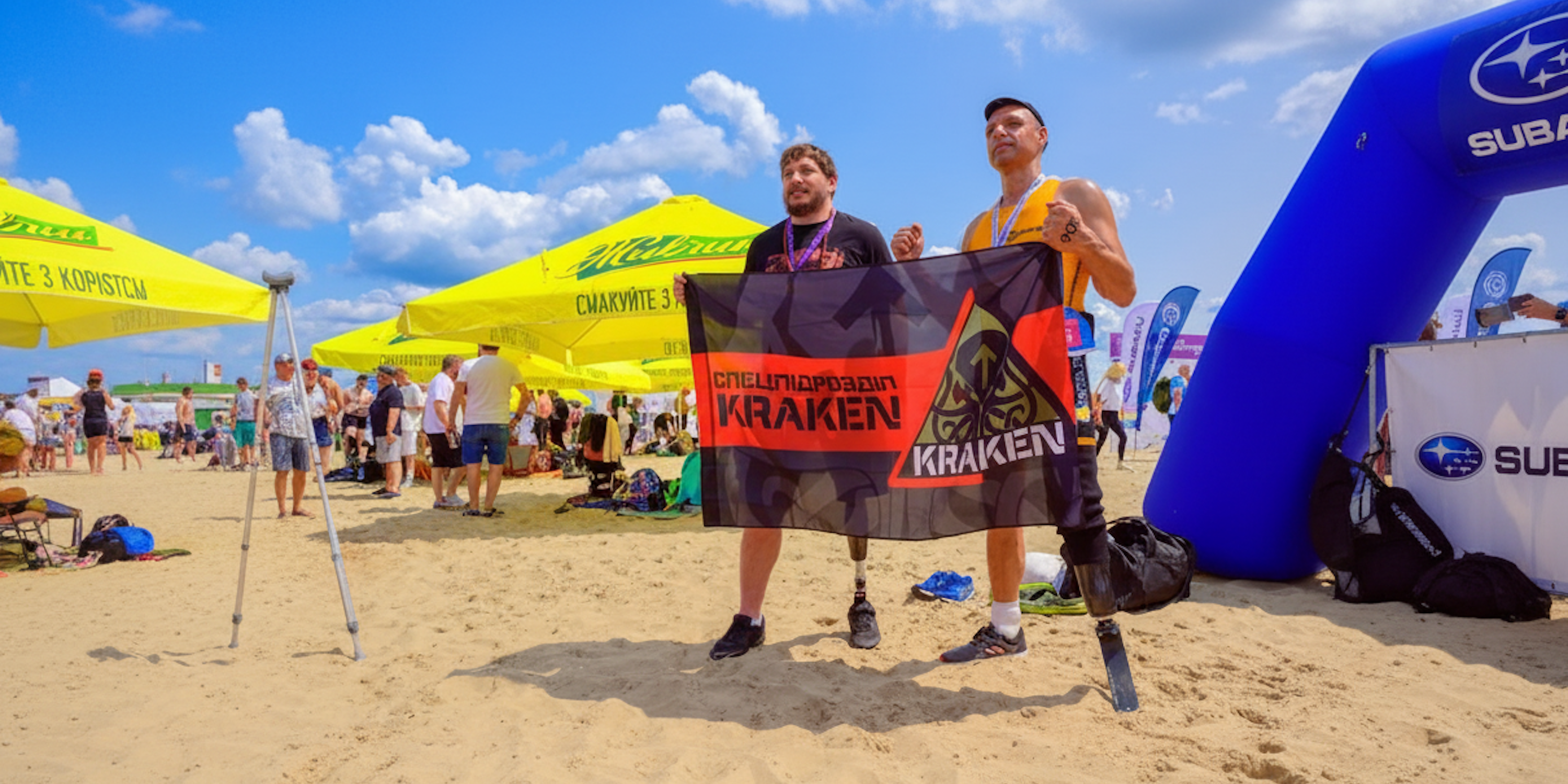
Kraken Ukraine: The Story, Symbolism and Patches of a Famous Special Unit
The name Kraken has travelled far beyond the old maritime legends that first made it famous. For many people today, especially those following events in Ukraine, it is associated with a Kharkiv-born special unit, the defence of the city and the wider Ukrainian resistance to Russia’s full-scale invasion.
Kraken’s distinctive name and imagery have also appeared on embroidered patches, collector displays and morale items made in Ukraine. But what is the Kraken unit, why was this mythical creature chosen as its symbol, and what should collectors know before buying a Kraken-inspired patch?
What is the Kraken special unit?
Kraken is a special unit operating within the Defence Intelligence of Ukraine, also known by the Ukrainian abbreviation HUR or GUR.
According to the unit history published by Defence Intelligence, the future core of Kraken began preparing before Russia launched its full-scale invasion on February 24, 2022. Experienced veterans and intelligence officers helped train civilian volunteers in Kharkiv for approximately six months.
When the invasion began, these volunteers mobilized to help defend Kharkiv. The unit was formally established in March 2022 from volunteers, veterans and military personnel brought together by the urgent defence of their city.
This origin is central to Kraken’s public identity: it was created not as an abstract symbol, but through the local effort to protect Kharkiv at one of the most dangerous moments in the city’s modern history.
Read the published history of Kraken from the Defence Intelligence of Ukraine.
From defending Kharkiv to the 2022 counteroffensive
Kraken became widely known through publicly reported operations in the Kharkiv region. Its first major operation took place in March 2022 during the liberation of Vilkhivka, east of Kharkiv. The unit was later involved in operations connected with Ruska Lozova and Pytomnyk.
During Ukraine’s successful Kharkiv counteroffensive in September 2022, Kraken personnel also took part in the liberation of Balakliia and Kupiansk. These actions helped transform the unit from a locally formed volunteer force into one of the most recognizable Ukrainian formations of the war.
The unit’s history did not end with Kharkiv. Defence Intelligence has also acknowledged Kraken’s participation in the battles for Bakhmut.
On February 24, 2026, four years after the beginning of the full-scale invasion, the unit received a battle flag—a formal symbol of honour, courage and continuity.
Defence Intelligence of Ukraine: Kraken receives its battle flag.
Why the name “Kraken”?
The kraken comes from Scandinavian maritime folklore. It is traditionally imagined as an enormous sea creature, often resembling a giant squid or octopus, capable of rising from the depths and overwhelming even a large ship.
Learn more about the kraken legend from Store norske leksikon.
The exact reason the Ukrainian unit selected this name is not fully explained in the public sources cited above. Its symbolism, however, is easy to understand.
A many-armed creature suggests reach, coordination and the ability to act in several directions. A monster hidden beneath the surface can also suggest surprise, adaptability and power that an opponent recognizes only when it is already too late.
This should be understood as a symbolic interpretation rather than an official explanation from the unit. Still, it helps explain why the name has proved so memorable.
How Kraken became a symbol of Ukrainian resistance
Military symbols often acquire meaning through the actions and experiences connected with them. Kraken’s reputation grew from its association with the defence of Kharkiv, the liberation of occupied communities and the courage of the people who joined the unit.
For Ukrainians, Kharkiv is a major cultural, educational and industrial centre. Its defence in 2022 carried significance far beyond the city itself. The Kraken name therefore became linked not only with a particular formation, but also with local initiative, resilience and Ukraine’s determination to resist occupation.
Russian propaganda has attempted to turn the unit into a frightening or distorted image. In practice, that attention has only made Kraken more recognizable. Within Ukrainian popular and military culture, the symbol has been reinterpreted as one of strength and defiance.
What do Kraken patches represent?
Kraken-themed patches may feature an octopus or squid, tentacles, the word KRAKEN, subdued military colours or red-and-black accents. Some designs reference the visual language associated with the unit, while others are independent morale or collector designs created by Ukrainian manufacturers.
It is important to distinguish among:
- Official insignia issued or authorized for unit personnel
- Commemorative patches associated with a particular event or group
- Commercially produced morale and collector patches inspired by Kraken
A retail patch should not automatically be described as official unit insignia unless its provenance can be documented. Calling an independently manufactured item a Kraken-inspired Ukrainian morale patch or collector patch is more accurate and respectful.
For collectors and supporters of Ukraine, such a patch may represent admiration for the defence of Kharkiv, interest in modern Ukrainian history or solidarity with those resisting Russian aggression.
It can also be a compact piece of contemporary material culture—an object through which wartime symbols and stories are preserved.
Why Ukrainian military-style patches are collected
Ukraine has a rich patch-making culture. Official formations, volunteer groups, regional communities, artists and independent embroidery workshops have all contributed to a remarkable variety of designs.
Collectors value these patches for several reasons:
- Historical meaning: Designs record names, places, events and symbols connected with Ukraine’s defence.
- Ukrainian craftsmanship: Detailed embroidery turns complex artwork into a durable textile object.
- Personal connection: A patch may represent a hometown, family story, military service or support for Ukraine.
- Visual impact: Subdued colours, bold emblems and recognizable imagery make patches distinctive display pieces.
Not every patch is official or battlefield-worn, and a responsible product description should never imply that it is. Its value may instead come from its design, place of manufacture and connection with contemporary Ukrainian culture.
How to display and care for an embroidered patch
Most modern morale patches have a hook-and-loop backing. They can be attached to compatible panels on backpacks, tactical bags, jackets, caps or collector display boards without permanent sewing.
To preserve the embroidery:
- Remove the patch before washing the garment or bag
- Spot-clean gently with a soft, damp cloth
- Avoid bleach, high heat and aggressive detergents
- Store it away from prolonged direct sunlight
- Keep the hook backing attached to a loop panel when not in use
These simple precautions help protect the thread colours, shape and fine embroidered details.
A modern symbol with an ancient name
The kraken began as a creature of maritime legend, but in Ukraine the name has acquired a distinctly modern meaning. It now evokes Kharkiv’s defence, the transformation of volunteers into an organized special unit and the continued resilience of a country fighting for its freedom.
For collectors, a Kraken-inspired embroidered patch is more than an image of a mythical monster. It is a reminder of how symbols evolve—and how an ancient legend can become part of the visual language of present-day Ukrainian resistance.
Explore our Ukrainian embroidered patch collection, including the Kraken-inspired morale patch, made in Ukraine and shipped from our Canadian warehouse.

De Elena Volkova

Dejar un comentario
Este sitio está protegido por hCaptcha y se aplican la Política de privacidad de hCaptcha y los Términos del servicio.